A backlog of two hundred items
Nothing has been closed in a year because nothing has been decided. Grouping by underlying problem usually collapses it to a manageable number.
A roadmap that lists everything anyone asked for is a list, not a plan. Product work is deciding what comes next, writing down the reason, and being willing to defend it when the loudest customer asks about their feature.
The work starts with talking to the people who use the thing, which is where the difference between what customers request and what they need shows up. Requests arrive as solutions. The job is finding the problem behind them, because one problem often sits under five requests.
Then it is scope. Most features can ship at a third of the size and still settle the question they were meant to answer, and shipping the third teaches you whether the rest is worth building.
Nothing has been closed in a year because nothing has been decided. Grouping by underlying problem usually collapses it to a manageable number.
Built because a customer asked, released without a measure, forgotten. Agreeing the measure first changes what gets built.
Fine at five people, a bottleneck at twenty. The work is making the decision criteria explicit enough that others can apply them.
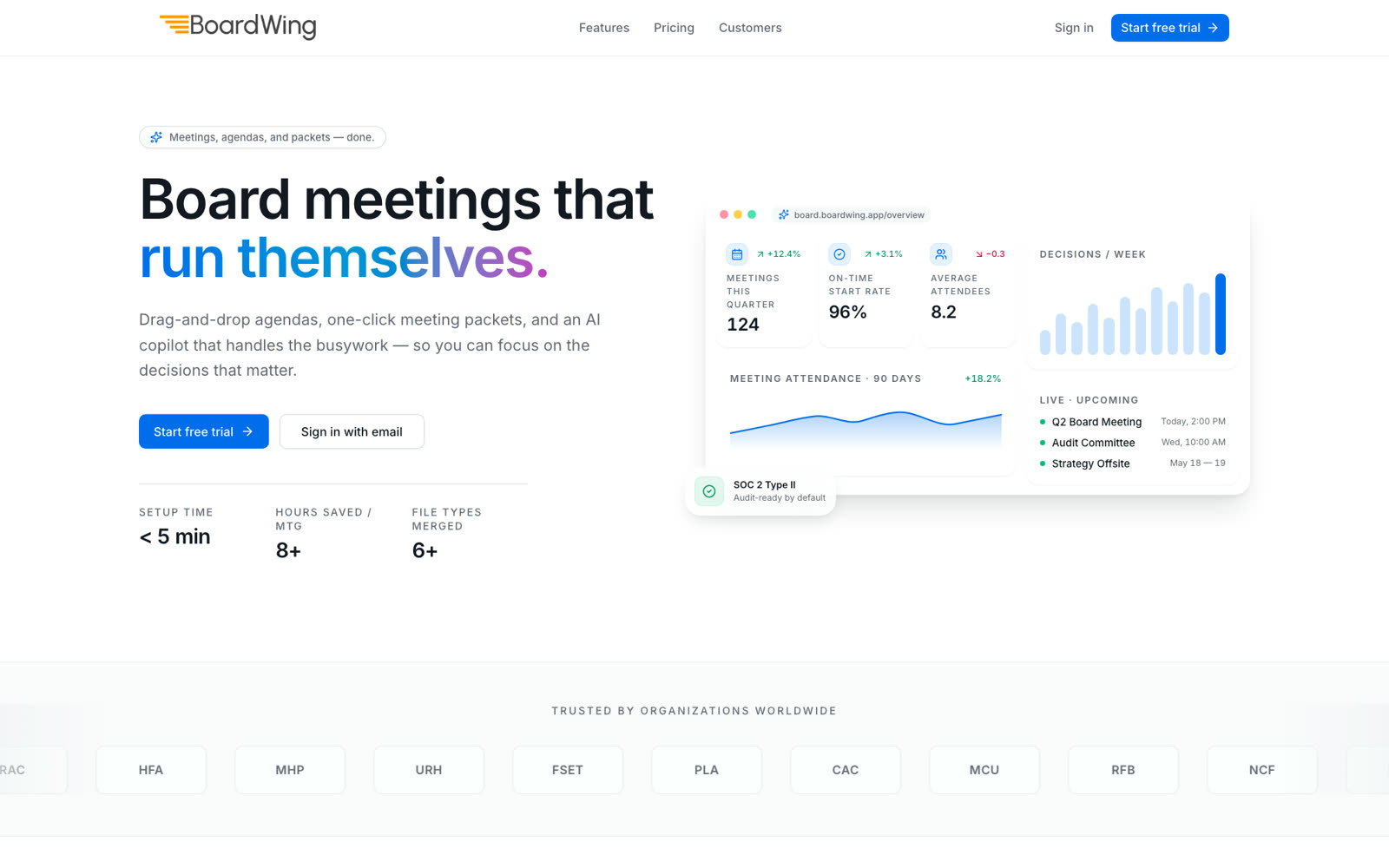
Board meeting software: drag-and-drop agendas, one-click meeting packets, and an AI copilot for the busywork, so boards can focus on the decisions.

A map-based marketplace where creators and small businesses show their work, sell, and get booked by people nearby. Built as an installable web app, so there is no app store between someone hearing about it and using it.
Early access. Accounts and the feed run on live data; the public launch hasn't happened yet.

Discovery calls are free and usually last 30 minutes. We listen first, and we will tell you honestly if product management is the wrong thing to spend money on.